Imagine walking into a supermarket.
Hundreds of products are competing for attention.
You aren’t reading every label.
You aren’t comparing every ingredient.
You aren’t studying every logo.
You are scanning.
A colour catches your eye. A shape looks interesting. A name feels familiar. A package looks premium. Another product disappears into the background.
This is the packaging shelf test.
And it reveals something important about product packaging:
Packaging has to communicate before customers have time to think.
For businesses launching consumer products, packaging is not simply a protective layer around the product. It is one of the most important pieces of marketing the customer physically encounters.
The three-second problem
A customer may take only a few seconds to notice your product.
That means packaging has to answer several questions almost instantly:
- What is this?
- What category does it belong to?
- Why should I notice it?
- What makes it different?
- Is it premium, affordable, natural, modern or traditional?
- Can I understand the key benefit?
If your packaging requires a customer to work hard to understand the product, you are already losing valuable attention.
More information doesn’t always sell more
Many businesses make the same mistake.
They believe adding more information makes packaging more convincing.
So the front of the package becomes filled with:
- Claims
- Certifications
- Product features
- Illustrations
- Ingredients
- Benefits
- Promotional messages
- Multiple fonts
- Multiple colours
The result?
Everything competes with everything else.
Good packaging is not about putting less information on the pack simply for aesthetic reasons.
It is about establishing visual hierarchy.
The customer should know what to look at first, second and third.
Packaging needs a visual entry point
Every successful pack has an entry point.
It might be:
- A distinctive logo
- A strong product name
- An unusual colour combination
- A recognisable illustration
- A unique structural form
- A bold typography treatment
The customer should have something that immediately pulls their attention.
Your product may be good. Your packaging may be hiding it.
This happens frequently with emerging brands.
A business spends months developing:
- A recipe
- A formulation
- A manufacturing process
- A supply chain
- A product experience
Then the product is placed inside generic packaging.
The consumer never gets to experience the quality because the first impression doesn’t communicate it.
Packaging is also a positioning tool
Consider two products selling the same basic category.
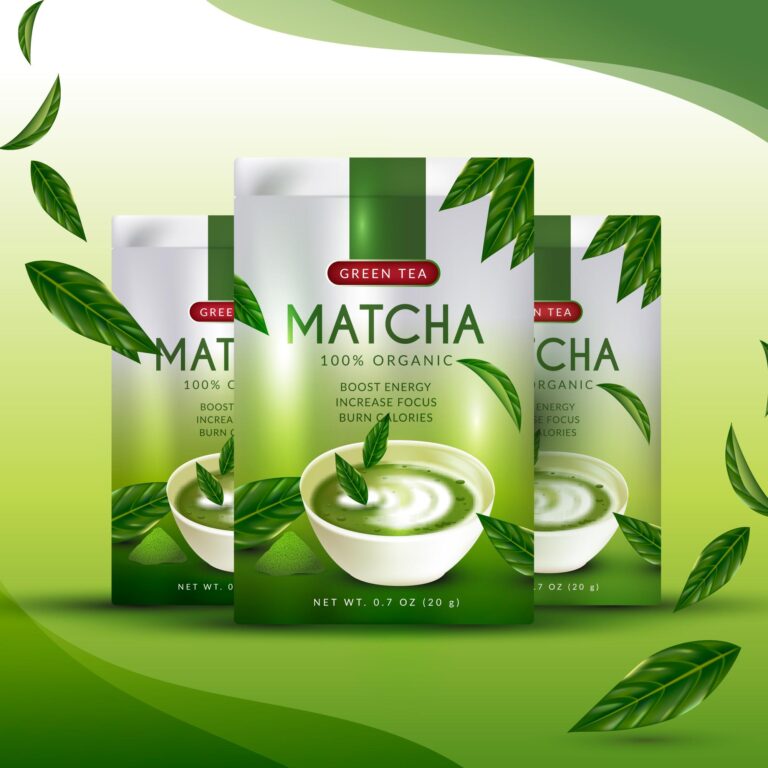
One uses inexpensive-looking graphics and crowded typography.
The other uses restrained typography, premium photography and carefully selected materials.
Even before touching either product, customers have formed assumptions about price and quality.
This is the power of packaging design.
Packaging tells customers where your product belongs in their mind.
Local brands have an opportunity
For businesses in Surat and across Gujarat, this becomes particularly interesting.
The region has a huge ecosystem of:
- Food brands
- Textile-related products
- FMCG businesses
- Jewellery brands
- Personal care products
- D2C companies
- Specialty foods
- Industrial products
- Consumer startups
Many businesses have excellent products but underdeveloped packaging systems.
That creates an opportunity.
Don’t design one box. Design a packaging system.
If you have five products today and plan to launch twenty more, don’t think only about the first package.
Think about the system.
What remains consistent?
What changes?
How are product variants distinguished?
How does the range look when displayed together?
Can customers recognise the parent brand from a distance?
Can a new SKU be introduced without redesigning the entire identity?
These questions transform packaging from artwork into brand strategy.
Packaging should work online too
Modern packaging has another challenge.
Your product may be discovered on:
- Amazon
- Flipkart
- Your website
- Quick-commerce platforms
- Influencer content
So packaging must work both physically and digitally.
A package that looks beautiful on a shelf but becomes unreadable in a 200-pixel product thumbnail has a problem.
The packaging shelf test
Before finalising packaging, place your design next to ten competing products.
Then step back.
Ask:
Does my product disappear?
If yes, the design needs work.
Then ask:
Does it look like everyone else?
If yes, the design needs differentiation.
Finally:
Can I understand the product category and main proposition quickly?
If not, the hierarchy needs improvement.
At Mark Studio, we help businesses turn packaging into a stronger brand touchpoint—from packaging strategy and visual direction to label design, product hierarchy and complete packaging systems.
Because sometimes the difference between a product that gets noticed and one that gets ignored isn’t what’s inside the box.
It’s what happens in the first three seconds.