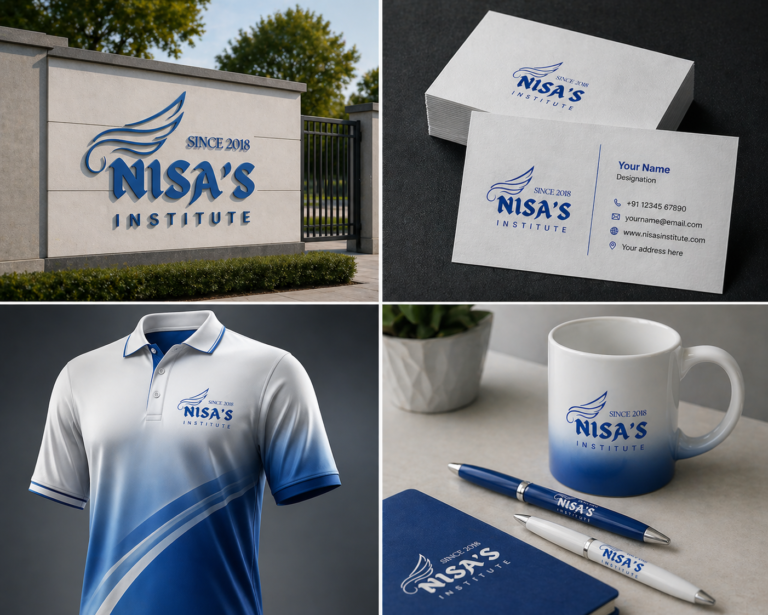
Branding is usually associated with things customers can see.
Logo.
Packaging.
Website.
Advertisements.
Business cards.
But some of the most important brand experiences happen inside the company.
The way employees present themselves.
The documents they use.
The way proposals are created.
The templates used by different departments.
The language used in emails.
The appearance of internal presentations.
These details may never have been formally called “branding.”
But customers can feel the difference.
Employees are brand touchpoints
Every employee who interacts with a customer represents the organisation.
If the company’s visual and verbal identity is clearly defined, employees have a framework to work within.
This is especially important when businesses grow.
Internal inconsistency eventually becomes external inconsistency
Imagine a company with:
- Five different presentation templates
- Three versions of the logo
- Different colours across departments
- Outdated company profiles
- Multiple product descriptions
- Different email signatures
Eventually, something will reach the customer.
The internal mess becomes an external brand problem.
Brand guidelines aren’t just for designers
A useful brand guideline can help:
- Sales teams
- Marketing teams
- HR
- Management
- Vendors
- Printers
- Digital agencies
- Social media teams
Everyone understands how the company should present itself.
Create a brand toolkit
A practical internal brand toolkit might include:
- Logo files
- Colour specifications
- Typography
- Presentation templates
- Proposal templates
- Email signatures
- Social media templates
- Company profile
- Product photography
- Iconography
- Brand messaging
- Usage guidelines
This reduces unnecessary decision-making.
Internal branding becomes especially important during growth
A company with ten employees can maintain consistency through direct communication.
A company with 200 employees cannot rely on memory.
Systems become necessary.
That is when branding moves from being a creative exercise to becoming organisational infrastructure.
It also helps new employees
Imagine joining a company and receiving a clear brand toolkit.
You immediately understand:
How the company presents itself.
How it speaks.
What it values.
How documents should look.
What customers should experience.
Compare that with receiving nothing and creating everything from scratch.
The difference can be significant.
Customers notice professionalism indirectly
Customers may never say:
“Your internal presentation template is excellent.”
But they notice when every interaction feels organised.
Brand consistency creates an impression of operational maturity.
At Mark Studio, brand identity projects can extend beyond the logo into practical systems that help teams communicate consistently across everyday business operations.
Because a brand isn’t only what your marketing department creates.
It’s what your entire organisation repeatedly puts into the world.